William Augustus Hazel at 1122 Raymond

The Victorian home at 1122 Raymond Avenue with its asymmetrical shoulder slopes didn’t catch my attention at first, since the Victorians decorated with towers and turrets across the street feature more prominently in information about the area. The story of one of its first residents, however, illustrates a Black community rallying to support civil rights laws.

1122 Raymond Avenue, Saint Paul MN

This house was built in 1885. The Saint Paul City Directories of the time list William Augustus Hazel and his wife Rosa at this address from 1896 to 1899. They had been living on the east coast where William had apprenticed as a stained glass artist and as an architect. The couple moved to Saint Paul around 1890 so William could represent the Tiffany Glass Company in Minneapolis (See 1890 article in the Appeal). The couple lived on the east side and Rondo before settling at 1122 Raymond for the last half of the decade, before William went on to academia, notably establishing the school of architecture at Howard University.

William’s introduction to Saint Paul was not full of welcome. An 1887 article in the Appeal describes how he was refused accommodations at the Clarendon Hotel (corner of Wabasha and 6th) and Astoria Hotel (374 Wabasha) due to the color of his skin.
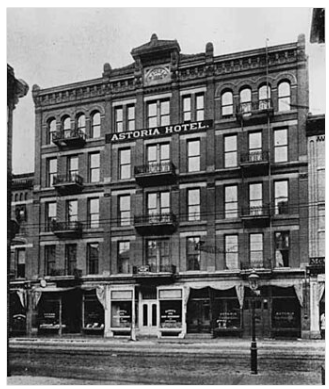
Astoria Hotel at 374 Wabasha (Photo credit https://dp.la/item/02e6a8fd172bbd6b62d7e76c5e2e85d7)

William sued the hotels for $2,000 and won the high profiled lawsuit for $25 and community recognition for taking a stand.

While his impact on civil rights in Minnesota and work in academia live on, I was unable to find any of his creative work. Local work included the now demolished St. Peter’s AME Church (downtown St. Paul, Minnesota) created in 1888 and the 1895 stained glass windows in the demolished Austin Catholic Church, Austin, Minnesota.

William Augustus Hazel
The Montgomery Advertiser, Sun, Oct 17, 1993 ·Page 91

See William Augustus Hazel at 1122 Raymond in the Saint Anthony Park map.
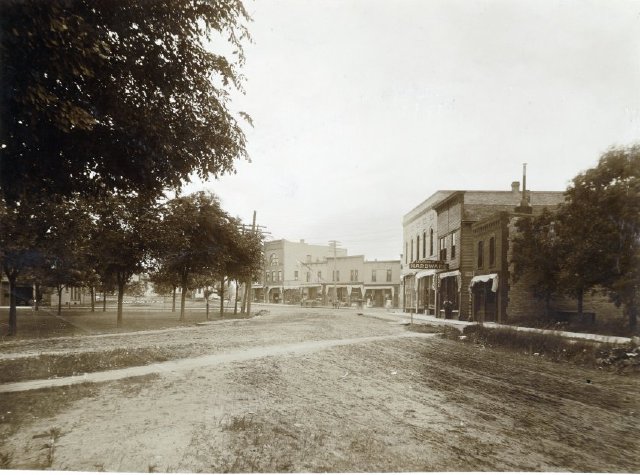
The Soderberg Family at Hampden and Raymond

From Ramsey Count Historical Society Past Perfect: Black and white photograph facing north on Raymond Avenue at Hampden Avenue in the St. Anthony Park neighborhood of Saint Paul. Some of the featured buildings (from left to right) include K.L. Fieseler (Druggist) at 930 Raymond Avenue, Olson & Co. Hardware Store at 924 Raymond Avenue, J.G. Soderberg (Barber) at 922 Raymond Avenue, and Engine House #13 at the northwest corner of Raymond and Bayless Avenues.

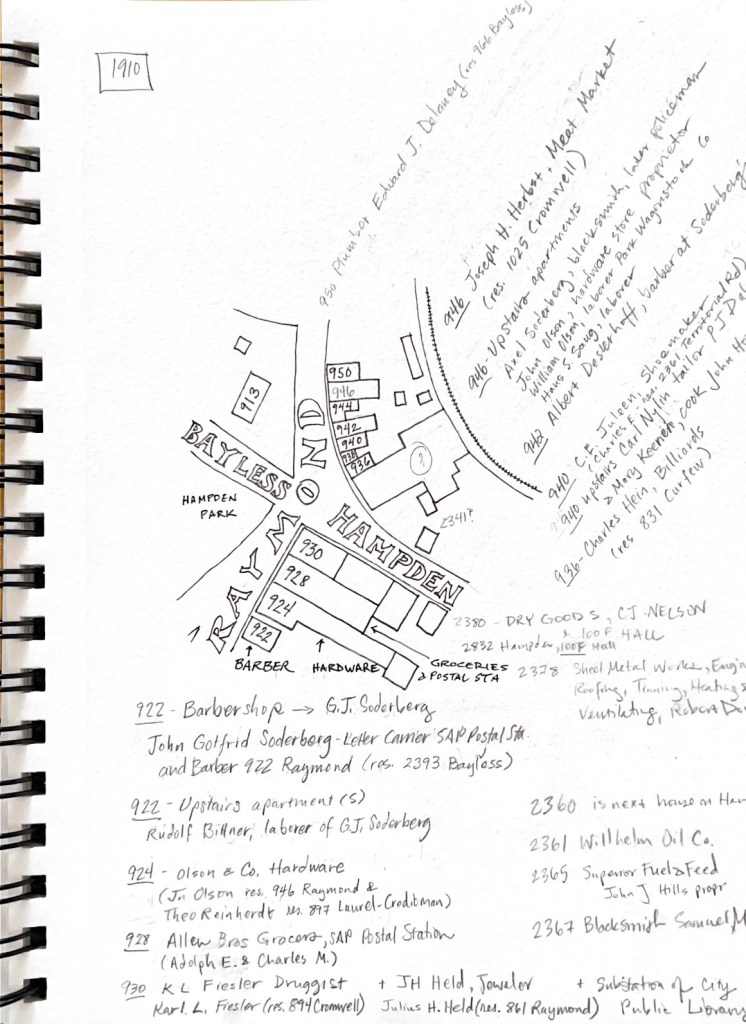
In my research of Saint Anthony Park in preparation for its map (see Carter Avenue Frame Shop‘s recent announcement), the neighborhood of South Saint Anthony Park has captured my imagination. In 1910, the intersection of Raymond and Hampden was a robust business district with a meat market, shoemaker, tailor, billiards, dry goods, barbershop, hardware store, grocery, pharmacy, and jeweler. Almost ever shop had apartments above. The 1910 census shows the neighborhood full of immigrants finding jobs in the industrial area just east of the intersection.

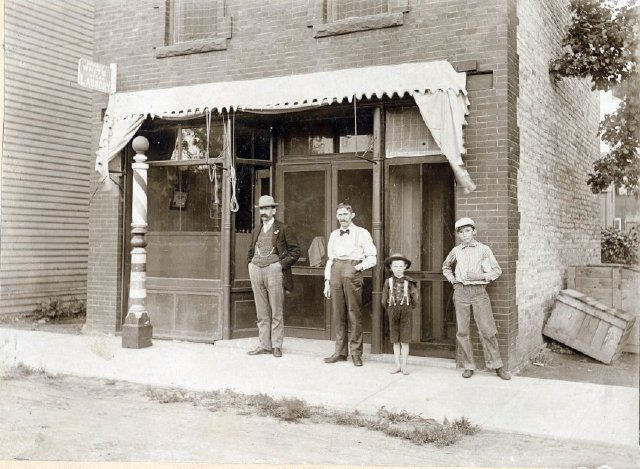
One of those families was the Soderbergs from Sweden. John Soderberg ran the barbershop at 922 Raymond and served as a letter carrier for the Saint Anthony Park postal station located a few doors down at 928 Raymond. His brother Axel Soderberg lived up the street at 946 Raymond and was employed as a blacksmith and then later as a policeman. The picture below show both Soderberg brothers with their sons. The 1910 census lists John with a 7-year old son Roger and Axel with a 12-year old son Axel M. I can almost hear the conversation when Roger borrowed his father’s hat for the photo.

From Ramsey County Historical Society Past Perfect: Black and white photograph of shop front with barbershop pole and sign for Agency White Steam Laundry on Raymond Avenue near Hampden Avenue in the Saint Anthony Park neighborhood of St. Paul.

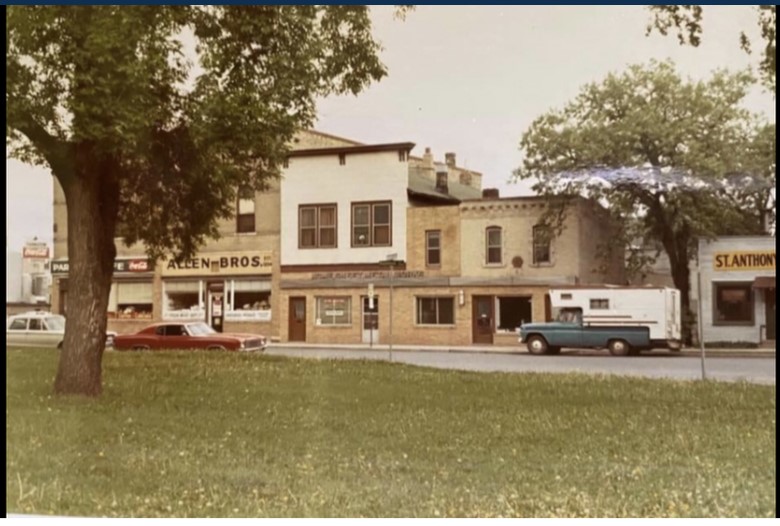
From https://www.minnepau.com/history.html: This photo, taken in the 1960s, was shared with us by a friend and Minnepau client.  His father owned a hardware shop on the plot where the Hampden Co-op parking lot currently stands from the 1950s until 1980 when the city bought him out.  At that time, a barber shop operated in the adjacent building and Allen Bros. (a grocery store) was located in the current Hampden Park Co-op space.  When the Minnepau plot was purchased, the little white building shown in the above photo was still (barely) standing and had previously housed an antique store. 

And here’s a sneak peek of the map in progress:

Samuel S. Fisher and the Wycliff Building

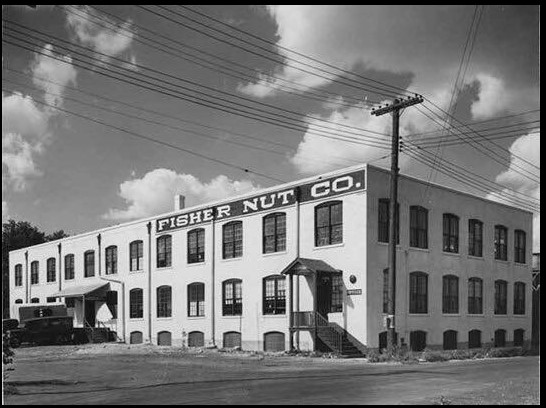
Fisher Nut Company 1940 (Photo Credit to Minnesota Historical Society)

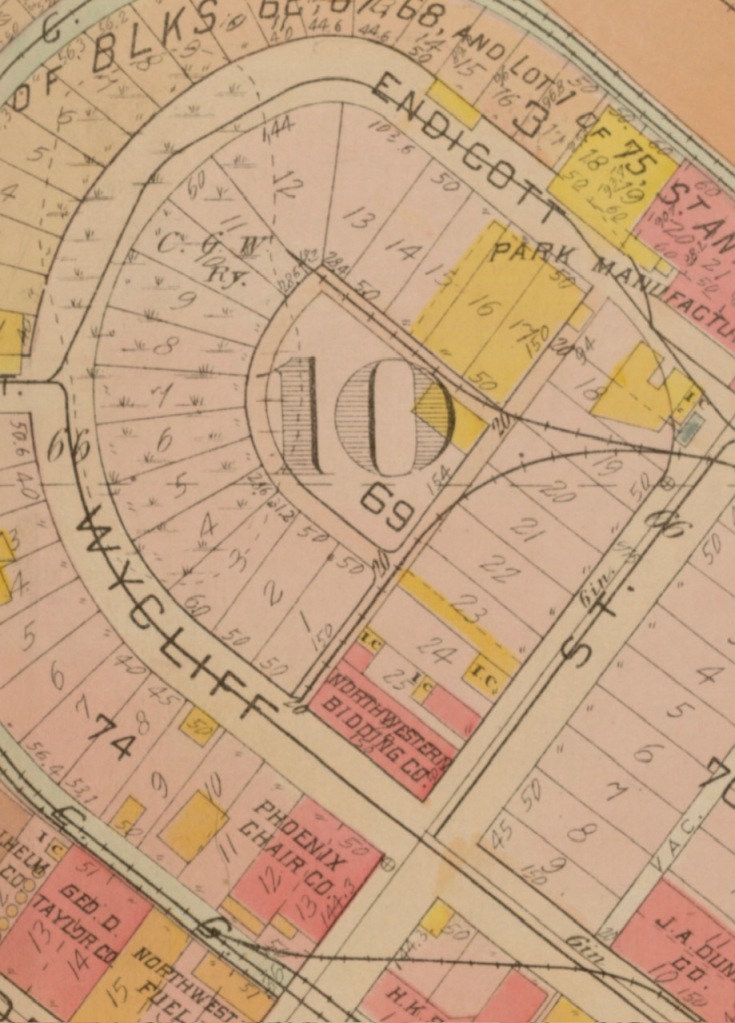
As I research Saint Anthony Park in preparation for its map (see Carter Avenue Frame Shop‘s recent announcement), there was repeated mention that the Wycliff Building at 2327 Wycliff had been the home of Fischer Nuts from 1890 to 1979. This was contrary to the 1916 G.M. Hopkins Map that I am working from that shows Northwestern Bedding and Manufacturing Co. at the north west corner of Bradford and Wycliff and a mystery that needed to be solved!

Turns out the first business at this location was Fred C. Genge & Co, a furniture manufacturer. The 1900 census finds Fred and Rose Genge living a few blocks away at 968 Manvel. Fred was an inventor and needed more space. He sold the 2327 Wycliff location to Northwestern Bedding in 1902. He later moved to Chicago and perfected a method to upholster cushions for automobiles and furniture.

Northwestern Bedding was originally located downtown Saint Paul and moved to Saint Anthony Park to take advantage of the easy access to trackage. (Note the 1916 map above that the entire industrial park was laid out around the curve of the railway tracks.)

1913 (Photo credit to https://www.lyfmap.com/index.php?memory=391237)

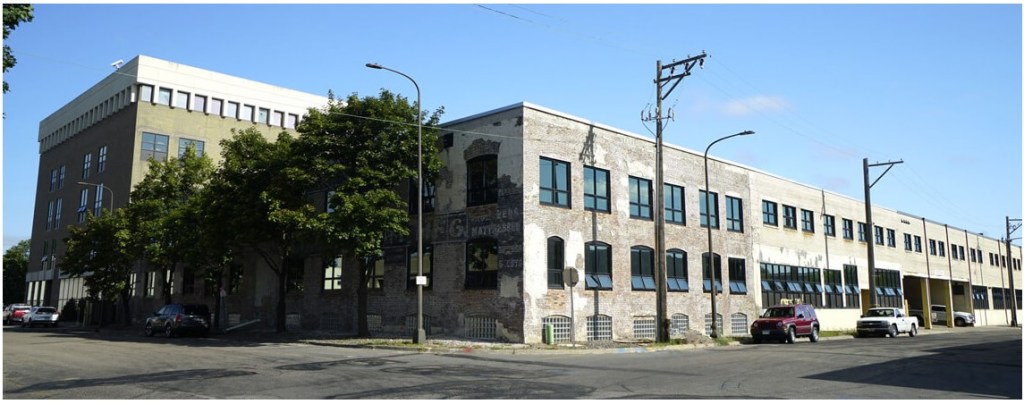
Northwestern Bedding Company operated at 2327 Wycliff from 1902 to the mid-1930s. Today, you can still see a ghost of mattress sign painted on the corner of the building.

By 1937, Fisher Nut & Chocolate Company was ready to make the same move from downtown Saint Paul to 2327 Wycliff. Samuel S. Fisher (1895-1974) began Fisher Nut in 1920.He had been introduced to salted-in-the-shell peanuts in France in 1917 as a Corporal in the US Army and opened his own one-man store at 3rd (Kellogg) and Minnesota Street. Fisher Nut moved to the South Saint Anthony Park location and built additions after additions to the building until it became the 3.94 acre industrial building that it is today. See the 1954 Star Tribune article about the company’s success. In 1962, Sam Fisher sold the company to Beatrice Foods but remained president until his death in 1974. Beatrice Foods sold the company to Proctor & Gamble in 1989 and by 1994 the factory was shut down and many people lost their jobs. See https://www.pbs.org/video/shutting-down-the-fisher-nut-company-28486/.

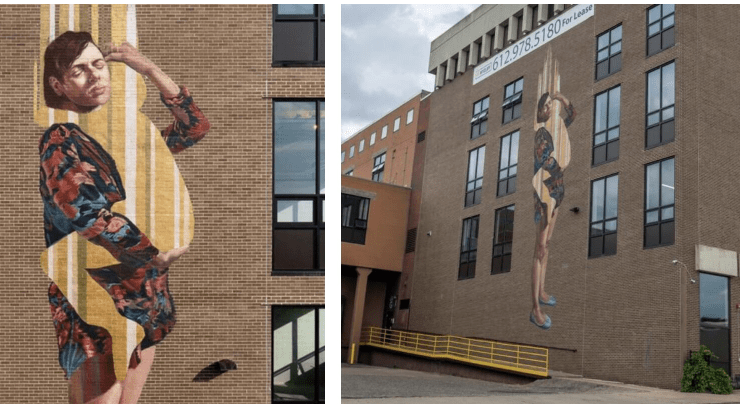
After the end of Fisher Nut, the building passed through various owners including a 2013 foreclosure. Now known as the Wycliff, the building is in a renaissance as it offers creative and industrial warehouse spaces for rent. Its modern additions are covered in murals:

Mural on Wycliff Building by Mariela Ajras (photo credit The Wycliff)

Elsie Louise Baker, Librarian of Saint Anthony Park

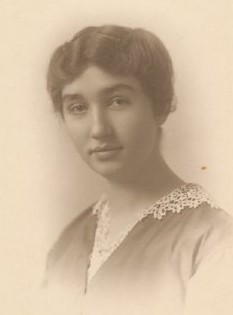
As I research Saint Anthony Park in preparation for its map (see Carter Avenue Frame Shop‘s recent announcement), I ran across Elsie Louise Baker in the digital archives of the Ramsey County Historical Society. My search was general: library. There was little information related to the photo other than it was taken in 1915 and Ms. Baker was associated with the Saint Paul Library system. I took note of the name, thinking she may be part of a map one day, not expecting she would have anything to do with Saint Anthony Park. Little did I know, she was exactly what I was looking for.

Elsie Louise Baker was a librarian at the Saint Anthony Park Library for many decades. The 1920, 1930 and 1940 census lists her occupation as first Library Assistant and then Librarian.

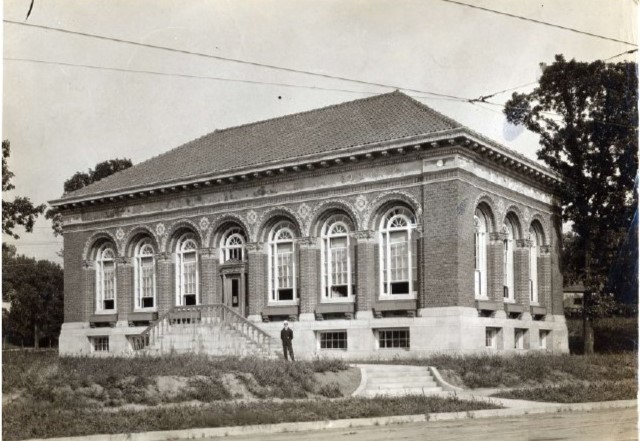
Saint Anthony Park Library just after its construction in 1917 (Photo credit: Ramsey County Historical Society)
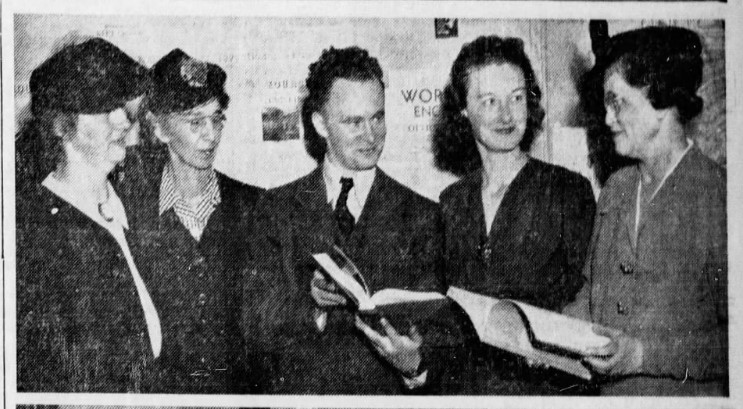
Newspapers in the 1930s and 1940s mention her leadership roles in the Minnesota Librarian Association. She is pictured on the right with other members of the Minnesota Librarian Association’s board at a convention held in Saint Cloud in 1941. (Photo credit: St Cloud Times, newspapers.com)

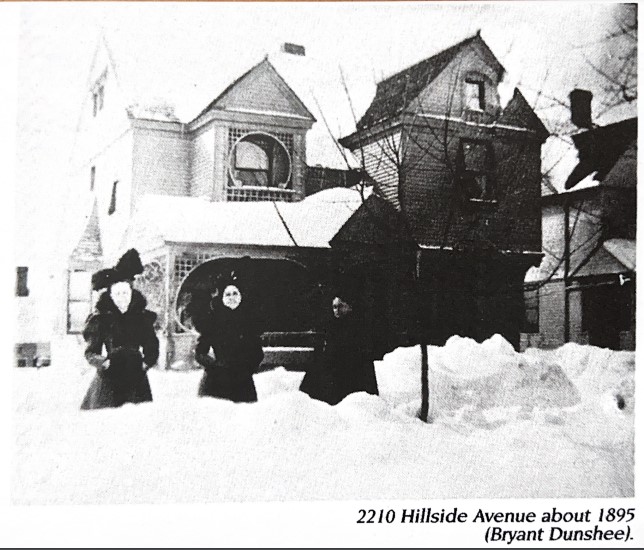
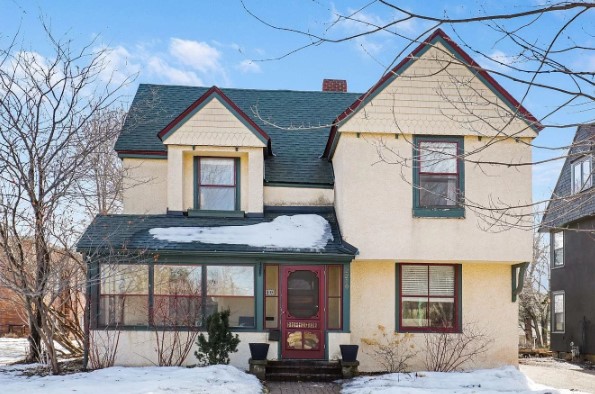
Ms. Baker was born in 1897 in Illinois. Per the 1910 census, she was the adopted daughter of Edwin Rice Baker (Cook County Auditor) and his wife Ada Louise Lewis Baker. They had been married in Milwaukee in 1892, and the couple moved to Chicago when Mr. Baker was hired as County Auditor in 1903. By 1916, Edwin returned to Minnesota and lived with his father, Oliver Baker, at 2210 Langford Street (now known as Hillside Street). At the age of 19, Ms. Baker was a student and a member of the Theta Sigma Phi sorority affiliated with the University of Minnesota. Her mother was not listed with the family in the census after 1910; Mrs. Baker’s 1941 death certificate lists a 12-year stay at the Anoka State Hospital for patients considered incurably insane. Edwin and Elsie Baker lived at 2210 Hillside for many years.

Photo from St. Anthony Park, Portrait of a Community by Dave A. Lanegran
2210 Hillside today (Photo credit: Zillow)
Obituary from the Arizona Republic (Credit: findagrave.com)
Elsie Louise Baker, 1915 (Photo credit: Ramsey County Historical Society)