“Joseph Renville (1779-1846) had an incomparable ability to navigate between the world of Whites and Dakota. His mother was Mdewakanton and father was French. Renville was an acclaimed interpreter, fur trader, brought the missionaries to educate, shared wealth with an open hand. “
– Paraphrased from North Country: The Making of Minnesota by Mary Lethert Wingerd
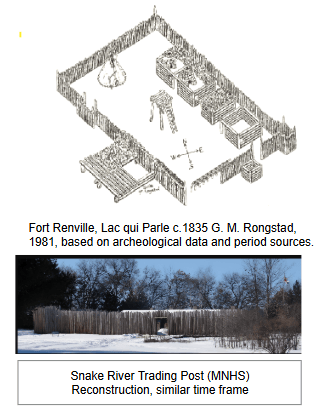
In the map drawing of Lac qui Parle, Joseph Renville is depicted him standing in front of Fort Renville, a fur trading post which he built in 1826 and operated for twenty years. Behind him are the bluffs that surround Lac qui Parle. Renville holds sheet music to the Lac qui Parle hymn Wakantanka taku nitawa or Many and Great, O God. Renville composed, translated and published Dakota-language hymnals in collaboration with his sons, and the missionaries at Lac qui Parle.
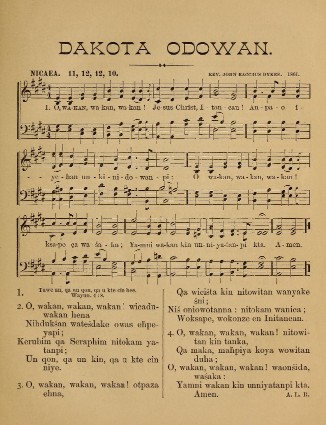
Renville adapted traditional Dakota melody and text to create the Lac qui Parle hymn, remembered for cross-cultural ties. The hymn was sung by the thirty-eight Dakota prisoners of war as they were led to execution at Mankato, Minnesota ion December 26, 1862. The hymn is still sung today, most notably at the Lac qui Parle mission church during the annual July service.
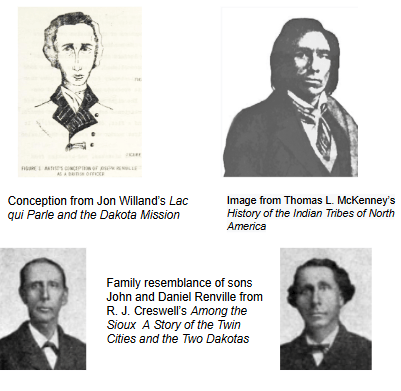
When I created this medallion featuring Joseph Renville, I struggled with how to depict his face. The most frequent image of Renville is from a drawing in Thomas L. McKenney’s 1872 History of the Indian Tribes of North America. Some researchers have raised doubt about the accuracy of the photo, potentially misattributed. A sketch from John Willand’s Lac qui Parle and the Dakota Mission portrays a longer faced, narrow nosed man who shares a certain resemblance to the images of Joseph Renville’s sons. The face of Joseph Renville is a combination of these images.
Below is inspiration for Fort Renville.